Sunday, 12 October 2014

3 interesting food to keep fat at bay


There are some foods which taste really good and are healthy too. This piece of information is for all those people who find it hard to go for dieting because they think that for the rest of the life they have to eat all boiled vegetables and have to give up on their share of butter as well. But, that is not true at all, instead if you look in closely you will witness, there are several food items which are interesting and have high nutritional value as well. SO, if you love almonds and nuts, then you can indulge in them without worrying about anything because they will help you in reducing the fat stored in your body. Now, it’s your turn to see how you can make your meals interesting using healthy food items. If you are having plain oatmeal, then it might not taste good, but, if you add quite a few berries in it, then it will automatically sweeten your oatmeal and will provide you with a different taste altogether. 

Some interesting fat reducing food items

If you thought you have to give up butter when you start dieting then think again because there is one kind of butter which is great for reducing fat. Yu must remember one thing while selecting your food item and that is it must not contain any artificial color or it must not have any added sugar at all. Read on to know more about the food items that will satiate your taste bud and will also burn your fat.

  1. Peanut butter – Yes, Peanut butter is waist friendly too, if you consume only two tablespoon of it daily. You never gave it a thought right? But, now you will be able to enjoy it too along with your kids, but remember though they have good things like niacin which prevents bloat and also provide you with good digestive system still you can over indulge in it. 
  2. Iced Tea – It is refreshing and healthy. The anti - oxidants enhances the metabolism speed and helps you in burning down as much as 266 calories every day.
  3. Parmigiano-Reggiano Cheese – Who said you cannot have cheese? Have this cheese in your soup and salads every day, but in moderation, of course. It is high in protein and is rich in calcium too. So, it is a double treat for your body and enhances fat reduction as well.

Fat Loss Factor Program: 

The Fat Loss Factor Program by DR Charles Livingston is one of its own kind program created for people who are frustrated with their belly fat and want to lose fat naturally. Thats exactly what fat loss factor serve.

With hundreds of fat loss factor reviews online, the systems becomes more like immortal. You can check fat loss factor review on youtube or view it directly from below.


Definetly, after such a tremendous fat loss factor review, its a must go thing that no one should miss!

Sunday, 28 September 2014

Your MOOD may not get improved from FATLOSS - Studies Say

Advertisements for weight-loss programs usually show cheery dieters delighted to be shedding their burden of excess pounds, but a new study finds that in the real world, over time, weight loss may be linked with worsening mood.

UK researchers following about 2,000 overweight and obese adults over four years found that people who lost 5 percent or more of their body weight had improved physical health but higher rates of depression.
“We know that weight loss is so hard to achieve or maintain, so we wondered whether part of the explanation might be that the psychological effects aren’t entirely positive,” said Jane Wardle, the study’s senior author and a researcher at University College London.
“Our study isn’t definitive because we were comparing people in the general population who had lost weight with people who hadn’t – it wasn’t a randomized trial,” Wardle told Reuters Health in an email.
But, she added, the results indicate that although weight loss brings health benefits, it may be a bit of a psychological struggle.
Wardle noted that many articles and products on weight loss imply that it will immediately make people feel better, but these findings show that may not be true.
Overweight and obese adults are often told to lose weight to improve their health. And according to a 2012 survey, about 60 percent of obese adults in the U.S. had tried to lose weight during the past year.
For overweight and obese people, weight loss is well known to lower the risks for a range of physical illnesses. But research on the psychological benefits has been mixed, Wardle and her coauthors write in the journal PLOS One.
The researchers used information for 1,979 overweight and obese men and women who were part of the English Longitudinal Study of Ageing, a large population study of U.K. adults age 50 and older.
Nurses measured the height, weight and waist circumference of each participant, and questionnaires were used to assess mood. In addition, blood pressure and serum triglycerides were measured to determine cardiovascular risk.
None of the participants was depressed when the study began.
Since this was an observational study, the researchers didn't give instructions or advice to lose weight, but they recorded whether or not the participants said they intended to lose weight.
After four years, 14 percent of the participants lost at least 5 percent of their initial body weight, or about 15 pounds on average. Another 71 percent had kept their weight stable, and 15 percent had gained more than 5 percent of their initial weight - about 14 pounds on average.
The average age was highest in the weight-loss group, and there were more men and more wealthy participants in the weight-stable group. People in the weight loss group also tended to have more weight to lose than their counterparts.
Psychological wellbeing deteriorated in all three groups, but members of the group that lost weight were 80 percent more likely to be depressed than the people who maintained their weight.
The study doesn’t prove that losing weight caused depression, the authors note. It’s possible that depression caused some people to lose weight or that neither caused the other and that something else the participants had in common was responsible for the weight loss or the depression.
But Wardle said she has some idea why weight loss might be connected with depression. “In order to lose weight, a person has to eat less than they would like to, and possibly less than people around them, and losing out on the pleasure of food is bound to be hard, even if there are compensations in terms of dropping a dress size and improving your health,” she said.
“Maybe if we were more honest about the fact that it won’t necessarily make you feel good in the short-term, people would gear themselves up for the challenge,” Wardle added.
She and her colleagues suggest in their report that more investigation into the emotional consequences of weight loss is needed.
Dr. Ronald Sha, the medical director of the Duke University Diet and Fitness Center in Durham, North Carolina, told Reuters Health he is puzzled by the findings, based on his own experience at his clinic.
“We see people for a more abbreviated time - a matter of weeks, but virtually everyone who leaves the (Duke Medical Center) leaves here in a much better mood,” said Sha, who wasn’t involved in the new study. “Everybody sees considerable improvement in their physical function, they see considerable improvement in their mood and they all lose weight.”
Source: http://news.yahoo.com/weight-loss-may-not-improve-mood-study-213816526.html
SOURCE: http://bit.ly/1n0O4Hb PLOS One, online August 6, 2014.

Saturday, 30 August 2014

Fresh Fat-Loss Drug Scandal in France


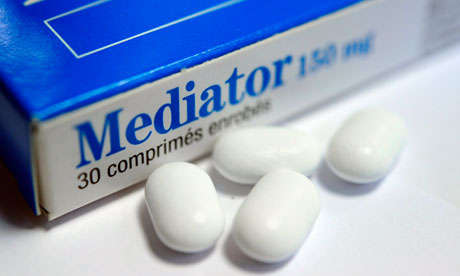
Mediator drug
Mediator, which was prescribed as an appetite suppressant and is believed to have killed at least 500 people.

There is a fresh news that a Fat-Loss drug believed to have killed hundreds of people in France's biggest pharmaceutical scandal has sparked fresh controversy as victims complain of delays in state compensation and a leading drug-company boss has been placed under formal investigation for manslaughter.
The amphetamine derivative Mediator was marketed to overweight diabetics but often prescribed to healthy women as an appetite suppressant when they wanted to lose a few pounds.
According to the French health ministry, it has killed at least 500 people from heart-valve damage, but other studies put the death toll nearer to 2,000. Thousands more complain of cardiovascular complications that have limited their daily lives.

Furthemore, reports are coming tha as many as 5 million people were given the drug between 1976 and November 2009, when it was withdrawn in France, years after being pulled in Spain and Italy. It was never authorised in the UK or US.

The scandal, which has prompted the resignation of the head of France's public health agency, sparked a furore about drugs regulation and the lobbying power of pharmaceutical companies in France, which has one of Europe's highest levels of consumption of prescription drugs.
Mediator is now at the centre of one of the most important medical legal battles of the year. Along with the prosecution over the French-made faulty PIP silicone breast implants, it has shaken the French medical world.

Recently Louis Servier, the 90-year-old head and founder of France's second biggest drugs company, which created Mediator, was placed under formal investigation on suspicion of manslaughter. A related trial to determine whether the Servier company misled patients and authorities about the drug was postponed and is expected to start in spring. The company has denied the accusations.
Servier has long been a powerful figure in the Paris establishment. Less than a year before Mediator was withdrawn, he was awarded France's highest state honour, the Legion d'Honneur, by Nicolas Sarkozy – who once acted as his lawyer.

Dominique Courtois, of Avim, a Bordeaux-based association dealing with thousands of victims' cases, said victims were finally being heard. He added: "The manslaughter charge is very important. That the justice system has made the link between the deaths and the drug is key. There were lots of doctors who saw problems, but no one listened. Now patients and GPs are being listened to."
Daniele Mourhlon, 71, a retired police administrator from Albi, had a thyroid problem when she was prescribed with Mediator to avoid gaining weight. She said: "Ironically I was actually never a person who carried extra weight. I had had three kids and people always said how slim I looked. I cooked healthily and loved long hikes. But I followed the doctor's orders and took Mediator three times a day for five years and it cut my appetite." But it had a terrible side-effect. "My kids said: 'Mum, you're speaking quietly, walking slowly.' It's as if I was on tranquilisers. They thought there was something odd about me." Mourhlon had to have open-heart surgery on three valves after damage from the drug. "Since then I'm very fragile. I'm dependent on medication. I have problems breathing and can't do even the smallest things. I can't hike any more. My life expectancy has been reduced. I'm angry with the pharmaceutical labs. I never would have taken it if I'd known."
Joseph Reynel, 78, a retired IT worker, has type two diabetes and was prescribed the drug from 2003 to 2009. He now has heart valve disorder and struggles for breath. "My flat is on the third floor without a lift. It got to the stage where I couldn't climb the stairs carrying a pint of milk. So I had to leave and rent another apartment at great personal expense. The judicial process is slow and there has been no movement on parallel compensation claims. But what stuns me is the lack of support from the state, even psychological support. The victims are the ones who have to bear the consequences of this and we have been totally abandoned."

Source: "theguardian.com"